Loading...
Serving Delray Beach, FL and surrounding areas. (561) 407-6046
Your commercial floor takes daily punishment from traffic, spills, and equipment. We install heavier-build epoxy systems designed for South Florida conditions - moisture-tested, properly prepped, and rated for the work your space actually does.
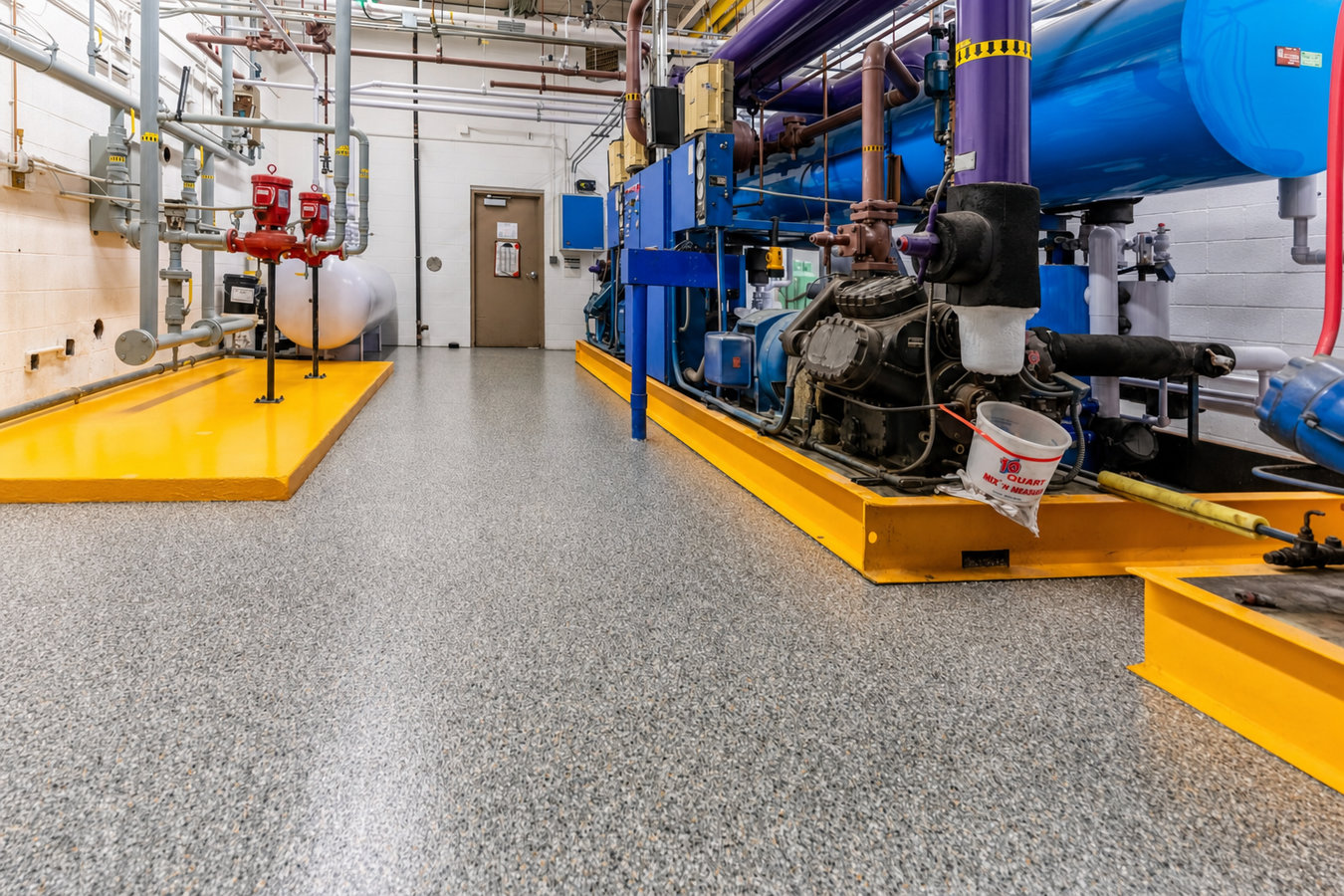
Commercial and industrial epoxy floor coatings in Delray Beach use heavier-build resin systems applied over mechanically prepared concrete, most jobs span two to five days including cure time, and the finished floor handles forklift traffic, chemical exposure, and daily heavy use that residential products are not rated for.
If you run a warehouse, auto shop, retail space, commercial kitchen, or any business where the floor takes constant punishment, the product grade and installation process matter as much as the coating brand. South Florida adds another layer of complexity: Delray Beach's humid climate and shallow water table mean moisture moves through older commercial slabs constantly, and a contractor who skips the slab assessment is setting your floor up to fail before the first busy season is over. Much of the commercial building stock in Palm Beach County dates from the 1970s through 1990s, and those older slabs often carry years of oil contamination, previous coatings, or surface degradation that requires thorough prep before anything new will stick.
If you also need a heavy-duty solution for a utility or service space without the full commercial footprint, our Garage Floor Coatings service covers that territory. For spaces with extreme moisture exposure or chemical contact, Urethane Cement Flooring is a step up in durability and is worth considering for commercial kitchens or food processing areas.
If liquids soak into your floor instead of sitting on top, the concrete is unprotected and getting harder to clean over time. In a commercial or industrial setting, this is not just an appearance problem - it is a hygiene and liability issue. An epoxy coating seals the surface so spills wipe up cleanly and do not penetrate the slab.
In Delray Beach's humid climate, moisture pushing up through older concrete slabs leaves behind a white, chalky residue. This is a sign your slab is actively absorbing and releasing moisture - the exact condition that causes coatings to fail if it is not addressed before application. It does not disqualify the floor from being coated, but it requires moisture treatment first.
A coating that is coming up in patches means the original install was not done correctly - most likely insufficient surface preparation. Applying a new coating over a failing one will fail just as fast. The right fix is to strip back to bare concrete, address whatever caused the failure, and start fresh with proper prep.
In Delray Beach's active commercial real estate market, a clean, well-coated floor makes a strong impression on prospective tenants or buyers and signals to health inspectors that the space is well-maintained. If you are getting ready for any kind of formal review or transition, the floor is one of the first things people notice.
Every commercial install we do begins with mechanical surface preparation - diamond grinding or shot blasting to open the concrete profile, remove contamination, and give the epoxy a surface it can grip. From there, the system we recommend depends on the type of business, the level of traffic, and what the floor will be exposed to day to day. A multi-coat broadcast flake system with a polyaspartic topcoat works well for auto shops and light industrial spaces. A solid-color high-build system suits warehouses and distribution floors where cleanability and durability matter more than appearance. For spaces that face extreme moisture exposure or chemical contact, Urethane Cement Flooring is a step up in chemical resistance and thermal shock tolerance that makes sense for commercial kitchens, food processing areas, and similar environments.
For service areas and utility spaces that do not require a full commercial-grade system, Garage Floor Coatings covers mid-range durability needs at a residential or light-commercial scale. OSHA guidance on slip, trip, and fall prevention is worth reviewing before choosing a finish - slip-resistant texture is an option on any system and is worth specifying for loading docks, kitchens, or any area that sees wet conditions.
Best for warehouses, distribution centers, and industrial floors where maximum durability and cleanability are the priority.
Suits auto shops, retail spaces, and light industrial environments where appearance and slip resistance both matter.
Recommended for loading docks, commercial kitchens, and any area where wet surfaces create a safety concern.
Required for older Delray Beach slabs or any commercial slab testing positive for elevated moisture vapor - addresses the issue at the substrate rather than coating over it.
Delray Beach sits in one of the most humid regions in the continental United States, and the commercial building stock in this area is largely older - much of it built in the 1970s through 1990s. Older slabs are more likely to carry surface contamination from years of oil, cleaning chemicals, or previous coatings, all of which have to be fully removed before new epoxy will adhere properly. Add in the salt air from the Atlantic coast and the city's shallow water table, and you have a set of conditions that genuinely punish installations done without the right preparation. Contractors who learned their trade in a drier inland market sometimes underestimate how much these factors matter in South Florida - which is why local experience is worth asking about directly. Businesses in Boca Raton and West Palm Beach face the same climate conditions, and we bring the same approach to every job across the corridor.
Florida also has real licensing requirements for this type of work. The state requires a current contractor's license, and Palm Beach County has its own local licensing board on top of that. Hiring an unlicensed contractor leaves you with limited recourse if the work fails and can create liability issues for your business. The Florida DBPR license verification tool lets you confirm any contractor's credentials in about two minutes - always worth doing before signing anything.
We schedule a site visit - any quote given without seeing the space in person should be treated with caution. The walk-through covers space dimensions, concrete condition, how the floor is used, and your scheduling constraints. You get a written estimate with no obligation.
We test the slab for moisture vapor emission before any coating decision is made - critical in Delray Beach where ground moisture is a consistent factor in older commercial buildings. We also check for previous coatings, oil contamination, cracks, and surface damage. Any issues that need to be addressed before coating are explained upfront.
We grind or shot-blast the surface to the right concrete surface profile, remove all contamination, and fill any cracks or voids. Coating goes on in layers - primer, body coat, topcoat - with each layer needing time to set. In Delray Beach's summer heat, we schedule application for early morning hours to avoid curing problems.
After the final coat, plan for light foot traffic at 24 hours and 5 to 7 days before heavy equipment or vehicles return. We do a final walk-through before the job is complete and provide simple care instructions. If anything does not look right during the walkthrough, that is the time to say so.
We come to your space, assess the floor in person, and give you a written quote. No phone estimates, no surprises on the invoice. We typically respond within one business day.
(561) 407-6046We test every commercial slab for moisture vapor before recommending a system. South Florida's humidity makes this the most important pre-installation step, and skipping it is the leading cause of premature coating failure in this climate. The test adds time - and it protects your floor.
Florida requires a current state contractor's license for this type of work, and Palm Beach County adds a local licensing layer on top. We hold all required credentials and welcome you to verify the license number through the Florida DBPR before signing anything. Palm Beach County's contractor licensing board is also available as an independent reference.
We plan commercial jobs around your operating schedule to minimize downtime. Application in South Florida's summer heat happens in early morning windows to avoid curing problems. We communicate the timeline clearly before starting so you know when the floor is available at every stage.
Salt air from the Atlantic degrades certain coating types faster than most inland contractors anticipate. We specify topcoat sealers rated for coastal environments - not because it is an upsell, but because it is the practical choice for any floor that needs to hold up here beyond the first year.
A commercial floor that fails early costs you more than the price of a second installation - it costs you the business days you spend coordinating a redo. We do the job right the first time so that is not a conversation you ever have to have. Reach out below and we will respond within one business day.
Mid-range durability systems for residential garages and light-use service spaces that need a clean, finished floor without a full industrial-grade install.
Learn MoreA step above standard epoxy in chemical resistance and thermal shock tolerance - the right choice for commercial kitchens, food processing areas, and facilities with heavy washdown requirements.
Learn MoreWe come to you, assess the concrete in person, and give you a written price - no phone estimates and no pressure to book on the spot.